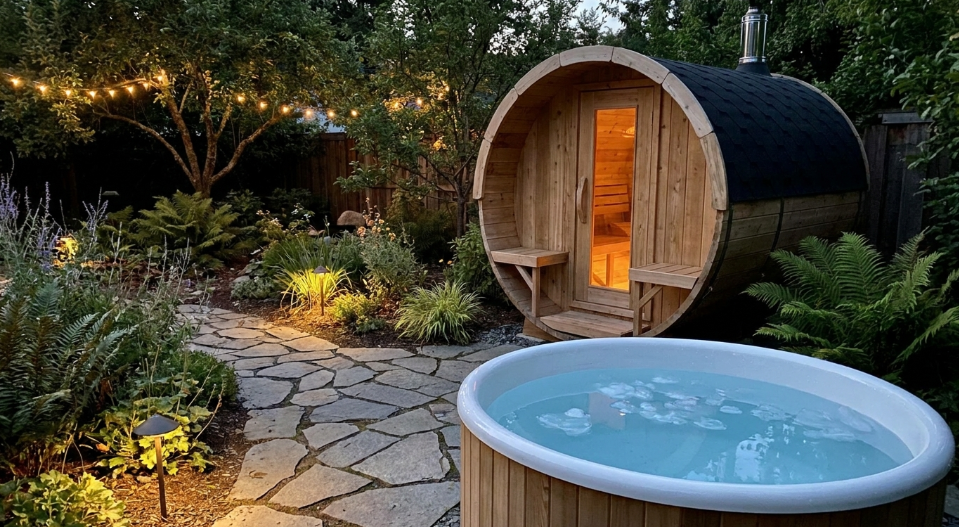
What to Put a Traditional Sauna On: Pads, Decks, and Gravel
A traditional sauna can sit on a poured concrete pad, a pressure-treated deck, a paver base, or a compacted gravel bed, and all four hold up fine as long as the surface is level, well-drained, and rated for the cabin’s weight. A loaded cedar cabin with a stone-filled heater can run 1,200 to 2,500 pounds or more depending on size, so the base has to carry that load without shifting once the ground freezes and thaws through a full season.
How does a concrete pad compare to the alternatives?
A poured concrete pad, typically 4 inches thick over a compacted gravel sub-base, is the most stable option and the one most manufacturers recommend without reservation for anything larger than a two-person cabin. It resists frost heave better than any other option here, sheds water cleanly if it is sloped away from the structure, and gives a mudroom-style entry a solid, dry landing. The tradeoff is cost and permanence: a poured pad runs several hundred to over a thousand dollars depending on size and local labor rates, and it is not something you move later if the sauna needs to relocate.
What about a pressure-treated wood deck?
A pressure-treated deck built on concrete footings or helical piers works well for cabins under roughly 2,000 pounds, and it has the advantage of raising the sauna off grade, which helps with drainage and keeps the sill away from standing water. Joist spacing needs to be tighter than a typical outdoor deck, often 12 inches on center instead of 16, because the concentrated weight of a stone-filled heater and several bathers sitting on one bench is a heavier point load than furniture. Manufacturers that specify structural requirements by cabin model, SweatDecks among them, are worth checking before a deck contractor finalizes joist spacing.
Is a paver base a reasonable middle option?
Interlocking pavers set over a compacted gravel and sand base split the difference between a concrete pad and raw gravel. They drain well, they are easier to level precisely than poured concrete, and a homeowner comfortable with basic landscaping tools can install one over a weekend for a small cabin. The base still needs 6 to 8 inches of compacted gravel underneath in most climates to resist frost heave, and skipping that step is the most common reason a paver base settles unevenly within a year or two.
Can compacted gravel alone carry a sauna?
Plain compacted gravel, without pavers or a pad on top, works for smaller cabins in climates with mild freeze-thaw cycles, but it is the least forgiving option if the base was not compacted in stages. A gravel pad needs to be built up in 4-inch lifts, each one compacted with a plate tamper, to reach the density needed to resist settling under a loaded cabin. Skimping on compaction is the single biggest reason a gravel-based sauna develops a lean within its first year, so this is not a good place to save an afternoon of labor.
What role does drainage play regardless of the base?
Every base option above only performs as well as the drainage around it. A sauna site should slope away from the structure at roughly a quarter inch per foot for at least six feet, so rain and snowmelt move away from the sill rather than pooling under the floor. Cabins set into a low spot in the yard, regardless of whether the base is concrete, deck, or gravel, are the ones most likely to develop rot at the base plate within a few seasons.
How does climate change the calculation?
In regions with hard winters, frost heave is the deciding factor more than any other. Concrete footings poured below the local frost line, or a gravel base built deep enough to stay unfrozen at its core, both resist the seasonal shifting that can crack a shallow pad or twist a deck frame. In milder climates without a hard freeze, the choice comes down more to budget and how permanent the installation needs to be, since frost heave is a minor concern and any of the four base types will likely hold level for years.
Does the foundation investment pay off over time?
A stable, well-drained base is what keeps a sauna level and functional for a decade or more instead of needing repair after a few freeze-thaw cycles, and that matters because the health case for owning one rests on consistency of use rather than the occasional session. A Mayo Clinic Proceedings review examining sauna bathing alongside other lifestyle factors found regular use associated with favorable cardiovascular and general wellness markers across long-term Finnish cohorts, and a separate paper on the physiological effects of heat and cold reached broadly compatible conclusions. These remain association findings from observational studies rather than controlled proof that sauna time alone drives the outcome, but the pattern holds up well enough across the literature that a base built to last changes the odds a cabin actually gets used for years rather than sitting unused after settling unevenly in its first winter.
Frequently Asked Questions
Does a traditional sauna need a permit for its foundation?
It depends on the jurisdiction and whether the base counts as a permanent structure. A poured concrete pad or an elevated deck is more likely to trigger a permit requirement than a gravel bed, so it is worth a call to the local building department before work starts.
How thick should a concrete pad be for a sauna?
Most manufacturers recommend at least 4 inches of poured concrete over a compacted gravel sub-base for cabins up to six-person capacity. Larger cabins or ones with a heavy stone-filled heater sometimes call for a thicker pad or reinforcement mesh.
Can a sauna sit directly on grass or bare soil?
No. Bare soil compresses unevenly under a loaded cabin and holds moisture against the sill, which accelerates wood rot. Some kind of prepared base, even a modest gravel pad, is standard practice.
Is a deck or a pad better for drainage?
An elevated deck generally drains better because it lifts the structure off grade entirely, letting air circulate underneath. A pad needs to be sloped correctly at the time it is poured to achieve similar results.
How much weight does a loaded traditional sauna put on its base?
A two-person cabin with heater and stones often weighs 1,200 to 1,500 pounds, while larger four-to-six person cabins can run 2,000 to 2,500 pounds or more before bathers step inside. The base needs to be rated for that load plus a safety margin.
References
- Does the Combination of Finnish Sauna Bathing and Other Lifestyle Factors Confer Additional Health Benefits? A Review of the Evidence, Mayo Clinic Proceedings, 2023
- Effects of heat and cold on health, with special reference to Finnish sauna bathing, American Journal of Physiology, 2018
- Benefits and risks of sauna bathing, The American Journal of Medicine, 2001
- Product and installation safety standards, UL